Let's be honest. You've seen the photos of Canary Spring – those impossibly bright, flowing ribbons of yellow and orange cascading down white travertine terraces. It looks like another planet. But when you actually get to Yellowstone National Park, the reality hits. Mammoth Hot Springs is huge. Where exactly is this specific spring? Is it a tough hike? What's the best time to go to avoid the tour bus crowds and actually enjoy it? I've stood there, a bit overwhelmed myself on my first visit, watching people walk right past the most fascinating details.
This guide isn't just a rehash of park brochures. It's the result of multiple visits in different seasons, wrong turns taken (so you don't have to), and conversations with park rangers. I'll give you the exact, actionable details to find Canary Spring, understand what you're looking at, and capture its magic without the frustration.
Your Quick Jump List
What Exactly is Canary Spring?
Canary Spring isn't a standalone pool you dip your toes in. It's one of the most active and visually striking parts of the massive Mammoth Hot Springs complex in Yellowstone. Think of Mammoth as a giant, living sculpture made of travertine (a form of limestone), and Canary Spring is one of its most vibrant paintbrushes.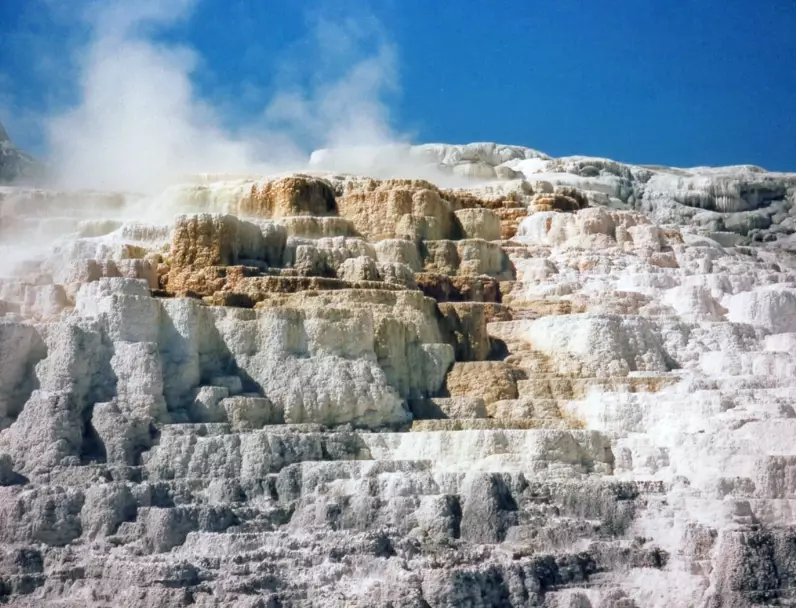
The name comes from its brilliant yellow color, which can look canary-bright in the right light. That color comes from thermophiles – heat-loving microorganisms that thrive in the hot, mineral-rich water. The different colors (yellows, oranges, browns, greens) represent different species and water temperatures. The white terraces are the raw travertine mineral deposits left behind as the water cools and evaporates.
Here’s the key thing most first-timers miss: Canary Spring is alive and constantly changing. I've seen photos from a decade ago that look completely different. A channel might dry up, a new one might burst open after a quiet period. That's why it's so fascinating. You're not just seeing geology; you're watching real-time biology and chemistry at work.
Canary Spring at a Glance:
Location: Mammoth Hot Springs, Yellowstone National Park, Wyoming. Specifically on the Upper Terrace Drive loop.
Access: Paved walking boardwalk (partially steep).
Cost: Covered by Yellowstone National Park entrance fee ($35/vehicle, valid 7 days).
Open: 24/7, year-round, but Upper Terrace Drive is closed to vehicles in winter (accessible by ski, snowshoe, or guided tour).
Key Feature: A vibrant, multi-colored thermal spring flowing over dramatic white terraces.
How to Get to Canary Spring: Parking, Trails & Logistics
This is where most guides are too vague. Mammoth has two main areas: the Lower Terraces (near the village) and the Upper Terraces. Canary Spring is on the Upper Terrace Loop Drive.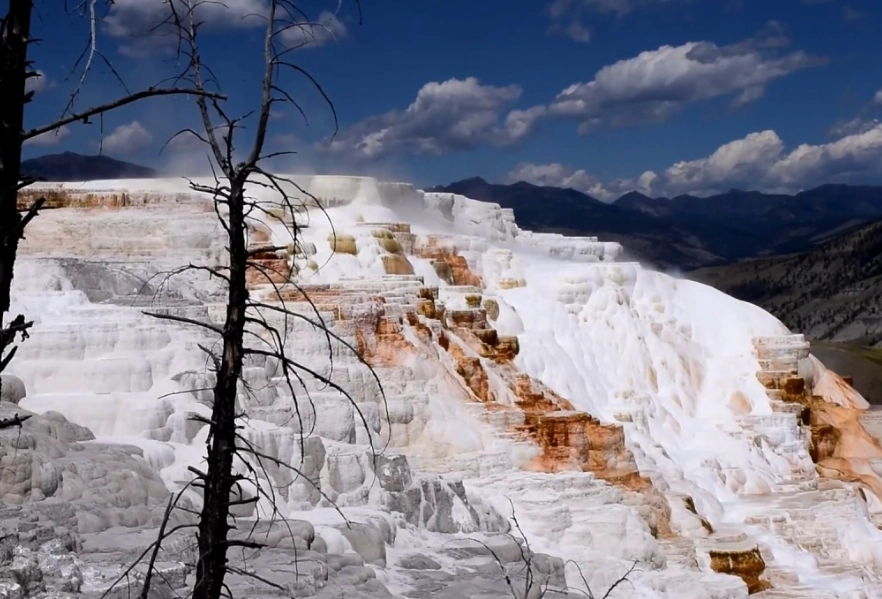
Step-by-Step Directions:
1. Get to Mammoth Hot Springs: From the North Entrance (Gardiner, MT), it's a 5-minute drive. From elsewhere in the park, follow signs to Mammoth.
2. Find the Upper Terrace Drive: In Mammoth, look for the turn-off just south of the main village area. It's a one-way, 1.5-mile paved loop road. There's a small, easy-to-miss sign.
3. Parking for Canary Spring: This is critical. Do not try to park on the narrow loop road. About halfway around the loop, you'll see a designated, paved parking area on your right. It fits about 15-20 cars. If it's full (common between 10 AM and 3 PM), continue around the loop and come back later. I've made the mistake of parking poorly and got a polite but firm reminder from a ranger.
4. The Boardwalk: From the parking lot, the spring is obvious. A raised boardwalk leads you right to it and around its main features. The initial climb from the lot is the steepest part, but it's short—maybe 50 yards of moderate incline. The rest is gentle ups and downs.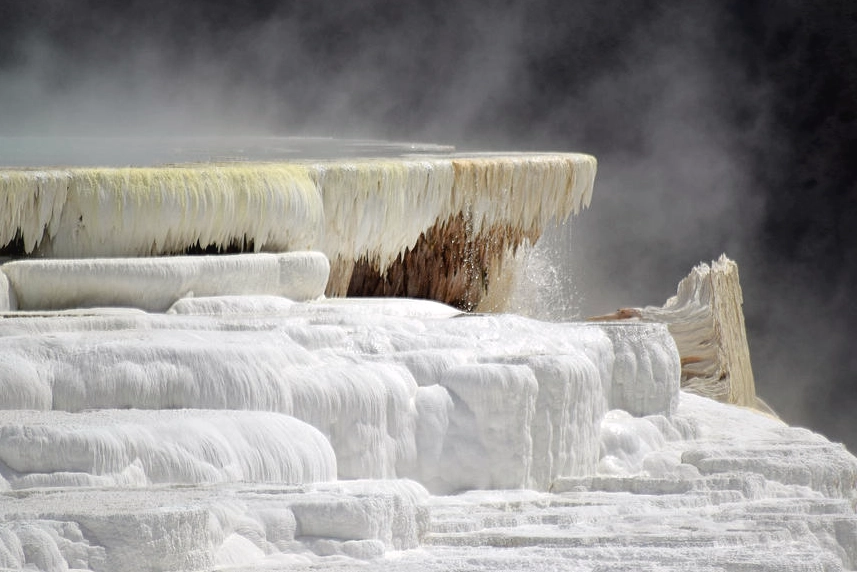
| Logistics Factor | Details & Insider Tip |
|---|---|
| Parking Lot Size | Small (15-20 cars). Arrive before 9:30 AM or after 5 PM for a guaranteed spot in peak season. |
| Walk Difficulty | Easy to Moderate. The short hill from the lot gets your heart rate up. The boardwalks have railings. |
| Time Needed | Plan for 30-45 minutes to walk the boardwalk and really look. Rushing through takes 10 minutes. |
| Restrooms | None at the parking lot. Use the facilities at the Mammoth Village or Lower Terraces before heading up. |
| Winter Access | Upper Terrace Drive closes to cars around Nov 1. Access is via ski, snowshoe, or snowcoach tour from Mammoth. A serene, frozen version of the spring awaits. |
When to Visit for the Best Experience
Timing is everything to avoid feeling like you're in a theme park queue.
Time of Day: Early morning or late afternoon. This is non-negotiable for a good experience. The parking lot fills by mid-morning with tour groups. I once arrived at 8:15 AM in July and had the spring virtually to myself for 20 minutes. The low-angle light at sunrise and sunset also makes the colors explode – the yellows become almost neon. Midday sun washes them out a bit.
Time of Year:
Spring/Fall: My personal favorites. Fewer people, active wildlife in the area (I've seen elk browsing near the parking lot), and cool temperatures make the steam rising from the spring dramatic.
Summer: Peak visitation. You must follow the early/late rule. It can be very hot on the exposed boardwalk.
Winter: A completely different, magical world. The steam is intense, the terraces are snow-dusted, and the colors contrast starkly against the white. You need appropriate gear and must check road and trail status with the National Park Service.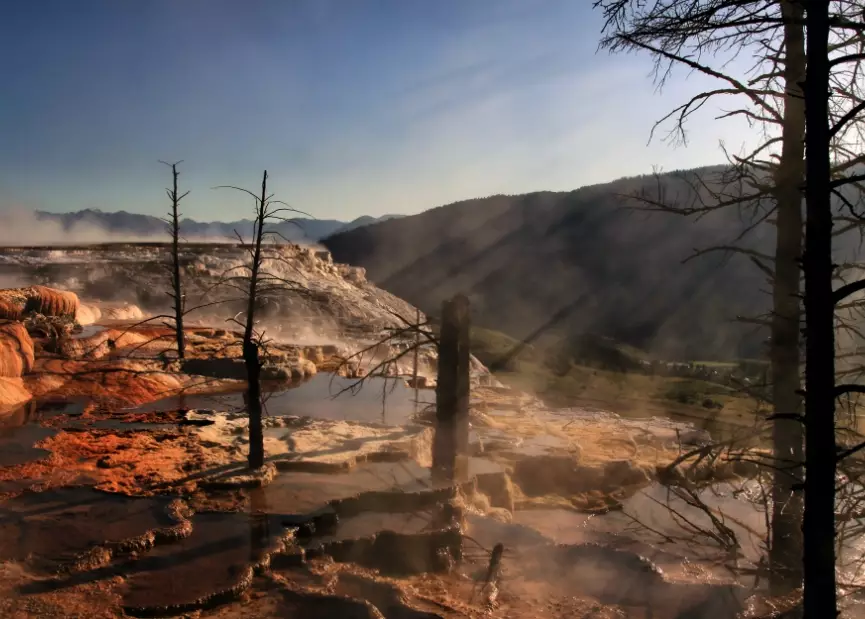
What to See and Do at Canary Spring
Don't just walk the loop and leave. Stop and look for these specific things.
1. The Main Flow and Color Bands
Stand at the main overlook. Follow the water's path with your eyes. See how the yellow is brightest right where the hot water emerges? As it flows down and cools, the colors shift to oranges and browns. Each band is a different microbial community. Look for the slow, constant growth of the travertine edges—it's like watching a very slow-motion waterfall turning to stone.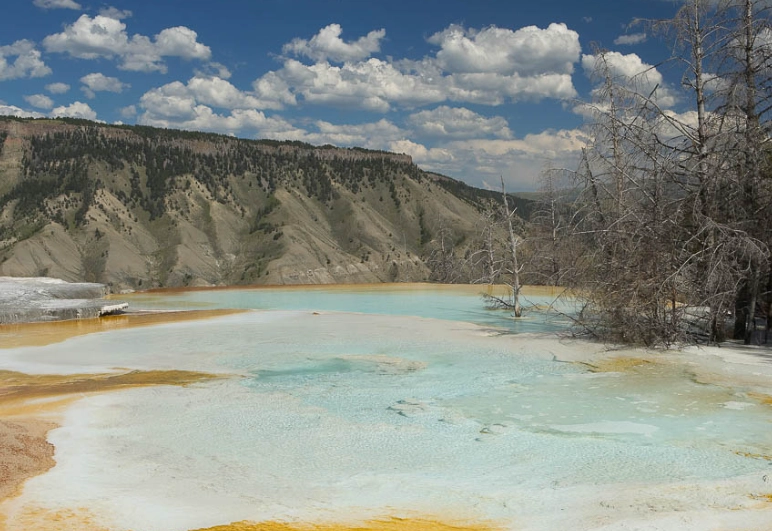
2. Listen and Smell
Close your eyes for a second (safely, away from the edge!). You'll hear a gentle trickling, sometimes a faint gurgle from underground. The smell is a distinct, mild sulfur scent (like rotten eggs, but much fainter than at some other thermal areas). It's the smell of active geology.
3. Photography Tips (From a Non-Pro)
Everyone gets the wide shot. Try these:
- Get close: Use a zoom lens or your phone's zoom to isolate a single, colorful rivulet against the white travertine.
- Include scale: Have a person (standing safely on the boardwalk) in the shot to show how massive the terrace formation is.
- Polarizing filter: If you have a DSLR, this can cut the glare on the wet surfaces and make the colors pop. On a phone, tap to focus on the brightest colored area.
- Shoot in low light: Morning and evening light add depth and shadow. The steam also photographs beautifully when backlit.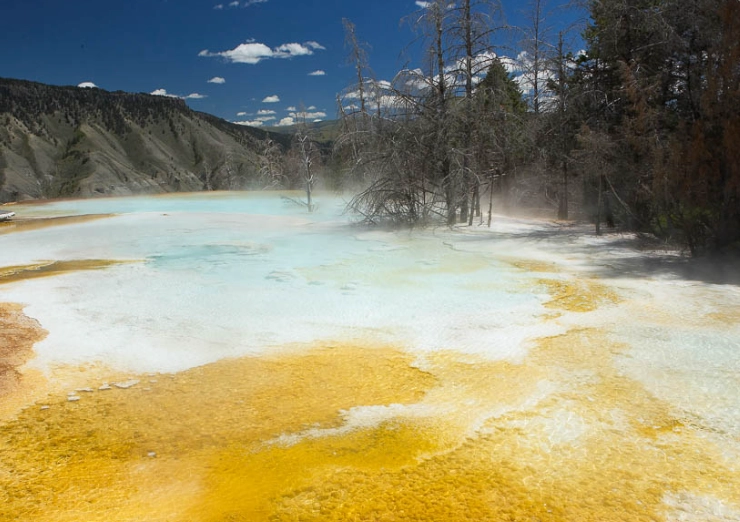
4. The Boardwalk Loop
Walk the entire loop. It gives you views from above, at the same level, and slightly below the spring. Each angle reveals new textures and flows you couldn't see from the first viewpoint.
Essential Safety and Etiquette Tips
This isn't a swimming hole. It's a fragile, dangerous, and legally protected thermal feature.
Stay on the Boardwalk. The ground near thermal areas is often a thin, brittle crust over boiling water. A misstep can cause severe, life-altering burns. I've seen people lean way over the rail for a photo—it's not worth it.
Do not throw anything into the spring. Coins, rocks, sticks—they pollute the feature and can alter its delicate plumbing. This is a living laboratory.
Supervise children closely. Hold their hands. The boardwalks are safe, but kids are curious and quick.
Respect wildlife. Mammoth is prime elk and bison habitat. Give them a wide berth. If an animal is on or near the boardwalk, turn around and come back later.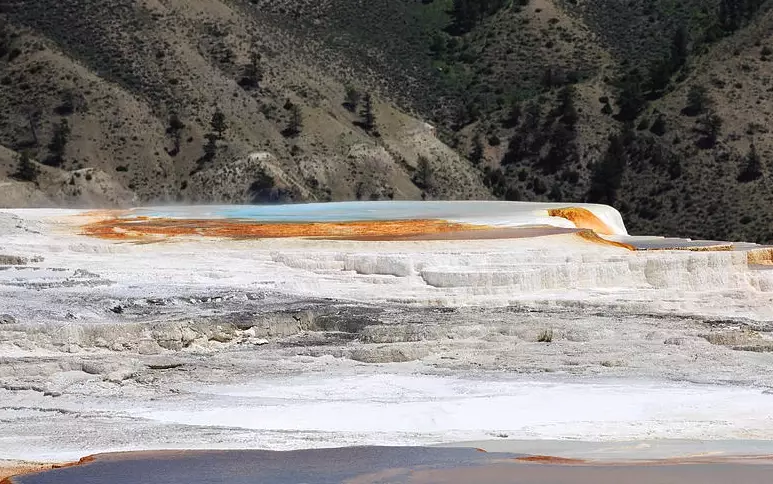
Your Canary Spring Questions Answered
Is Canary Spring worth the detour if I only have one day in Yellowstone?
How does Canary Spring compare to the Grand Prismatic Spring?
Can you see Canary Spring without hiking?
What's the biggest mistake visitors make at Canary Spring?
Are there any tours that specifically include Canary Spring?
Canary Spring is more than a checklist item. It's a place to witness the slow, beautiful, and powerful forces that built Yellowstone. With the right timing and a bit of patience, you'll get more than a photo—you'll get a memory of a landscape that feels truly alive. Now you know exactly how to make that happen.
This guide is based on firsthand visits and cross-referenced with current National Park Service resources for accuracy.